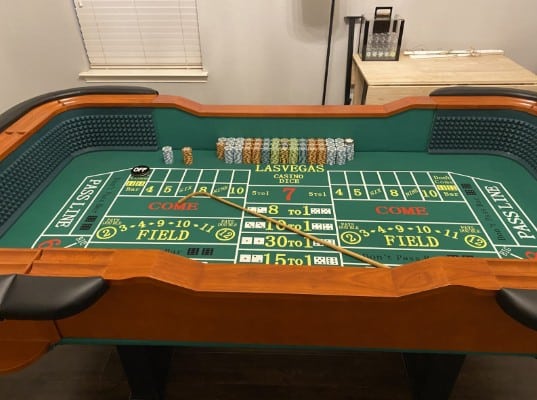
There’s no noise like it. The roaring crowd, chips slapping felt, dice clattering down the table. You could be deep in a casino with ten other games in sight, but your eyes always drift toward the action around the casino craps table. It’s a magnet.
Why? Because craps isn’t just a game. It’s theatre. One shooter, two dice, and a group of strangers all hoping for the same number. Cheers erupt, then silence, then cheers again. It’s chaos stitched with hope.
But this frenzy didn’t appear out of nowhere. Craps has roots deep in the past—centuries back. The modern version is American-born, but the origin traces back to an old English dice game called “Hazard,” which was a favorite of the gentry. Over time, French and American gamblers shaped it, simplified it, and brought it to the streets and, eventually, into the glowing world of casinos.
By the early 20th century, craps exploded in popularity, especially in underground clubs. Soldiers during World War II played it in barracks and alleys. Eventually, it made its way onto the casino floor—refined, regulated, and wrapped in green felt.
In today’s digital age, craps hasn’t faded. If anything, it’s gained a new fanbase thanks to online casinos, tutorials, and games like the aviator game signal, offering real-time strategy tips for players navigating fast-paced action.
And yet, no online version fully captures what a real table offers. The tension. The camaraderie. The rollercoaster of adrenaline that lives in every throw of those two cubes.

Anatomy of a Casino Craps Table
If you’re standing at a craps table for the first time, it can feel like you’ve walked into a tactical war room. Strange boxes, colorful zones, phrases you’ve never seen before—“Don’t Come,” “Big 6,” “Hardways.” But give it five minutes, and it all starts to click.
First, the physical layout. Most casino craps tables are about 12 to 14 feet long, with padded rails around the edges and a smooth felt surface. The surface is divided into two identical sides so multiple players can bet at once. Each side mirrors the other—same bets, same options.
At each end, you’ll find dealers managing the chips and a stickman controlling the dice. In the center lies the proposition area—this is where one-roll bets like “Any Seven” or “Yo” (eleven) are placed.
Now, the betting zones:
- Pass Line: The heart of the game. Most players place this bet first. If the come-out roll is 7 or 11, you win. If it’s 2, 3, or 12, you lose. Anything else sets the “point.”
- Don’t Pass: The opposite of the Pass Line. Here, you win if the shooter craps out and lose if they roll 7 or 11 on the come-out.
- Come/Don’t Come: Same as Pass and Don’t Pass, but made after a point is already set.
- Field: A one-roll wager on 2, 3, 4, 9, 10, 11, or 12. Simple and quick.
- Place Bets: Bets on specific numbers like 4, 5, 6, 8, 9, or 10 being rolled before a 7.
- Proposition Bets: Flashy one-roll wagers in the center. High-risk, high-payout, usually sucker bets.
Here’s a quick look at the main bets:
| Bet Type | House Edge | Payout | Typical Use |
| Pass Line | 1.41% | 1:1 | Core bet, common for beginners |
| Don’t Pass | 1.36% | 1:1 | Opposes the shooter |
| Come | 1.41% | 1:1 | Like Pass Line, placed after point |
| Field | 5.56% (2.78% on 2x payout) | Varies | One-roll wager, quick action |
Understanding this setup turns confusion into control. The table becomes a map. Every section has purpose. Every chip you lay down is a decision. And each roll? A chance to make your move.

The Basic Rules of Craps
You don’t need to memorize every bet on the felt. Just learn how the game flows.
It starts with the shooter. That’s the person rolling the dice. Each player gets a turn as the shooter, with the role rotating clockwise around the table. When it’s your turn, you’ve got to place a bet on the Pass or Don’t Pass line to roll.
The come-out roll follows next—this marks the beginning of a new round. If the shooter throws a 7 or 11, Pass Line bets win instantly. But if the roll is a 2, 3, or 12, those bets lose. These losing numbers are known as “craps.”
But if the dice show 4, 5, 6, 8, 9, or 10, then we’ve got a point. That number is marked on the table.
Now the goal changes: the shooter needs to roll that point again before a 7 appears. If they hit the point, everyone on the Pass Line wins. If a 7 comes up first, it’s called “seven out,” and the round ends. Dice go to the next shooter.
The entire rhythm of the craps table lives in that dance—come out, point, roll again. Every bet flows with that pattern. Understanding it is key. The best players don’t guess—they ride the structure of the game and place bets that fit where the round is in its lifecycle.

Betting Options Explained
Now let’s dive into the meat of craps—the bets. Some are basic. Some are wild. But all come down to timing, risk, and rhythm.
Pass Line and Don’t Pass are the starting points. Low house edge, steady wins. After that, you get the Come and Don’t Come bets—nearly identical to the Pass and Don’t Pass, but made after a point is already set. Think of them as side rounds running inside the main game.
Then you’ve got the Odds bet—arguably the best wager in the casino. It’s a side bet made after a point is established. Why is it so good? Because it pays true odds with zero house edge. Combine it with your Pass or Come bet, and you’ve got a strong edge.
Place Bets are simple—choose a number (4, 5, 6, 8, 9, or 10), and if it rolls before a 7, you win. The house edge varies—lowest on 6 and 8.
Buy Bets and Lay Bets let you back or bet against specific numbers, with small commission fees attached.
And then there are the flashier plays: Hardways (rolling a double like 2+2 to make 4) and Proposition Bets in the middle—quick-hit, often terrible odds, but thrilling for gamblers chasing a high.
Let’s narrow it down. If you’re new, start with these:
Top 5 Most Beginner-Friendly Bets
- Pass Line – Low house edge, foundation of the game.
- Come Bet – Great for staying involved after point is set.
- Odds on Pass/Come – Best value bet once point’s active.
- Place Bet on 6 or 8 – Easy to follow, decent return.
- Don’t Pass – Opposite play, just as strong strategically.
Stay off the prop bets until you’re seasoned. They’re tempting, sure, but the casino loves when new players throw chips on “Any Craps” without knowing the math. Keep your game sharp. Build your plays off logic, not luck.
Strategies for Playing at the Craps Table
The casino craps table isn’t a slot machine. You can’t just pull and pray. You need to think. The house always has the edge, yes, but smart players narrow that gap. Some even walk away ahead.
It all starts with knowing your bets. High house edge? Leave it. Zero-edge odds bet? Grab it. That’s how strategy begins—by choosing where your chips land.
Let’s talk risk.
- Iron Cross: You bet on the Field, and you Place 5, 6, and 8. Covers everything except 7. It hits often, but the payout structure is weak. You win small, lose big. It feels good—until the 7 comes.
- 3-Point Molly: A balanced play. You start with a Pass Line bet, then take full odds and two Come bets, each with odds. It keeps your money working while covering multiple numbers. It’s steady and respected.
- Conservative Flat Betting: Just bet the Pass Line and take odds. No flair, but rock solid. It’s perfect for learning rhythm, not chasing swings.
What matters even more? Bankroll discipline. Don’t chase. If you lose, don’t double down in anger. Set limits before you step up. This table can spin fast. Without control, you’ll burn through chips in a blur.
5 Common Mistakes Craps Players Make and How to Avoid Them
- Betting on Every Roll
The fix: Be selective. Not every toss deserves your money. Quality over volume.
- Ignoring Odds Bets
The fix: Learn to use them. They’re the best bets in the house. Pure math.
- Chasing Losses
The fix: Take a breath. Walk away if your plan’s off. Regroup, don’t react.
- Overplaying Proposition Bets
The fix: Know they’re entertainment, not strategy. Toss a chip for fun, not for income.
- Skipping Practice
The fix: Run free games online. Test your knowledge. Confidence matters when real chips are on the line.
This game punishes panic and rewards patience. Know your plan before the dice roll. Adapt if the table shifts, but never stray from the fundamentals.
Craps Table Etiquette and Superstitions
Step up to a craps table, and you’re entering a different world. There’s a code. You can’t see it written down, but break it and you’ll feel the heat.
Start with the basics. Don’t touch other players’ chips. Ever. If someone’s rolled and you reach into the layout, the dealers won’t be happy. Chips stay still once the dice fly.
When you shoot, use one hand, keep the dice above the table, and throw so they hit the back wall. Sloppy rolls? They’ll get called back. Try to look slick—nobody wants to wait while you fiddle.
Now, let’s talk about the most sacred of craps taboos. Never say “seven” once a point is set. It’s considered bad luck, like whispering defeat into a fighter’s ear. Players will glare. Some may walk away.
Other customs: if you’re rolling hot, players might ask you to keep shooting. Refusing is frowned upon. The dice belong to the table until they betray you.
As David Schwartz, UNLV gambling historian, once said:
“The craps table isn’t just a game; it’s a ritual. Every toss of the dice carries a legacy of hope and heartbreak.”
He’s right. People aren’t just betting—they’re joining a performance. Respect the flow, and it will respect you back.
Variations of the Craps Table Around the World
Not all craps tables are created equal. Walk into different casinos across the globe, and you’ll notice changes in size, rules, even betting limits.
Start with mini-craps. These tables are smaller, no stickman, and usually managed by one dealer. They’re often found in quieter casinos or during off-hours. Good for learning, though you lose the crowd’s energy.
Then there’s bubble craps—an electronic version. Players sit around a digital terminal while mechanical dice pop inside a transparent dome. Same rules, but no dealers, no chips. Some swear by it. Others say it kills the soul of the game.
Move around the world:
- Las Vegas: Home of the classic full-sized table. Standard rules, lively crowds, and the most variation in limits.
- Atlantic City: Similar feel, but you’ll notice differences—like mandatory dealer handling of chips, which slows play but improves accuracy.
- Monte Carlo: Expect elegance. Smaller tables, stricter etiquette, and more formal dealers. Bets are typically higher.
- Macau: Eastern flair meets Western rules. Games are fast, and table minimums vary widely. Some spots offer simplified craps to appeal to newer players.
Whether you play in a neighborhood spot or a luxury floor in Monaco, the essence stays the same: dice, felt, crowd, thrill.

How to Practice and Master Craps Without Going Broke
This game isn’t just for the high rollers. You can learn it. You can sharpen your edge—without bleeding money.
Start online. Tons of free simulators let you practice without pressure. No need to download anything fancy. Just search, click, and roll. Learn where the bets go. Figure out what strategies feel right for your style.
Next, try live dealer craps on online casino platforms. These give you a taste of the table’s rhythm with lower stakes and less intimidation. You still bet real money, but you can ease into it.
Look for low-limit tables if you’re in a physical casino. Early mornings or mid-week afternoons are perfect. You’ll find minimum bets at five bucks. Dealers are usually more patient too.
Set goals. Not money goals, but knowledge goals. “Today, I’ll only use the 3-Point Molly.” Or “I’m testing Place Bets on 6 and 8.” That mindset builds mastery.
And don’t forget—track your play. Note where you win, where you miss. Improvement comes from reflection, not just reps.
Conclusion: Why the Craps Table is a Timeless Casino Icon
Craps is the heartbeat of the floor. It’s got rhythm, noise, laughter, heartbreak, and triumph—all packed into a few feet of felt.
There’s no bluffing, no secret tricks. It’s just you, two dice, and the courage to bet on the unknown. And when the whole table wins? Strangers become allies. That shared victory is rare in the gambling world.
This game’s lasted centuries because it taps into something real. The chance to defy odds. To roll a winner. To belong to a crowd that’s holding its breath with you.
Play it smart. Learn it well. The casino craps table has stories to tell—if you’re ready to listen.
FAQ: Essential Questions About the Craps Table
What are the odds on a Pass Line bet?
Pass Line pays 1:1 with a 1.41% house edge. Add odds behind it for a zero-edge boost.
Can you influence the outcome with dice control?
Some swear by it. Casinos say it’s impossible. Truth? Very few have proven consistent results.
What’s the best strategy for a beginner?
Stick with Pass Line + Odds. Add Come bets with odds later. Simple, low-risk, and strong.
How does the layout affect betting strategy?
Understanding where bets go helps avoid confusion and mistakes. It also speeds up your play, which dealers appreciate.
Is online craps the same as live craps?
The mechanics are similar. But the vibe, the pressure, and the shared thrill of the live craps table? That’s unmatched.